How to Start a Luggage Storage Business in Your Area
If you are asking 'could I start a luggage storage business in my area?', begin with the journeys travellers actually make. Visitors may need to leave bags between checkout and departure, before check-in or during a day trip. Compare an approved staffed bag-storage service with self-service luggage lockers, then test local demand, host permission and the full operating budget before buying equipment.
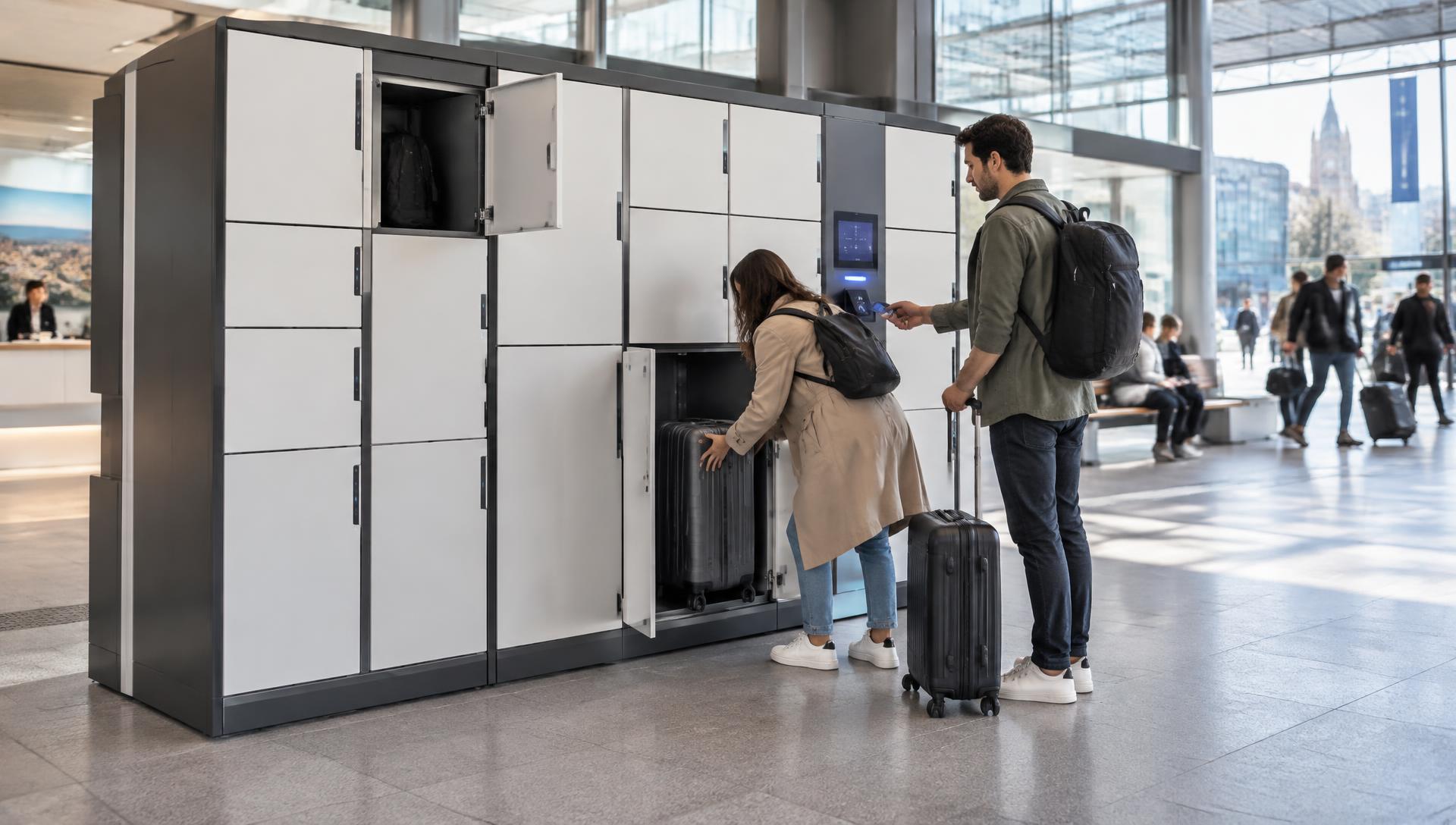
Start with the traveller's gap
Look for places where people must carry bags after hotel checkout, before check-in or while visiting an attraction. Hotels and short-stay apartments may serve their own guests; suitable public locations can serve travellers moving between stations, venues and visitor areas. Observe demand by time of day and season before choosing equipment.
Research luggage storage demand in your area
Map local hotels, serviced apartments, short-stay managers, transport interchanges, visitor centres and attractions. Walk the actual routes with luggage in mind: a site that looks close on a map may involve stairs, an inconvenient crossing or a detour travellers will not take. A station-adjacent shop is a different proposal from installing inside a station, which requires its own permission and procurement process.
Ask accommodation hosts how often guests request early drop-off or post-checkout storage, what they offer now and when requests cannot be met. Ask travellers about bag sizes, collection deadlines and what they would choose instead. Review existing left-luggage facilities, staffed storage networks and free hotel storage; do not treat visitor footfall or the absence of lockers as proof of paid demand.
Keep dated notes across weekdays, weekends, events and quieter periods. Test willingness to pay for a clearly described service, not just agreement that storage sounds useful. A small town with occasional visitors may need a different model from a city transport hub.
Compare three local luggage storage business models
Choose the customer and payer before choosing hardware. These models require a suitable site, clear custody and support arrangements; none is automatically low-cost or profitable.
| Model | Possible payer | Checks before launch |
|---|---|---|
| Staffed storage at an approved existing shop or venue | Traveller paying per bag or period | Secure segregated storage, opening hours, staff time, tagging, insurance and a host contract |
| Self-service luggage lockers at a visitor-accessible site | Traveller paying for an agreed compartment and duration | Whole installation cost, bag fit, reliable access, booking/payment scope and local fault response |
| Managed luggage service for hotels or serviced apartments | Property service fee, guest fee or a negotiated revenue share | Whether access is guest-only or public, host obligations, free alternatives and who supports each transaction |
Choose the site before the locker bank
A useful site is visible, accessible during the hours you advertise and controlled by a host who can approve installation. Confirm power, connectivity, accessibility, fire routes, surveillance and who responds if a user cannot open a door. Do not advertise 24-hour access unless the actual site provides it.
Approach nearby hosts with a specific proposal
Shortlist a hotel or apartment operator, a suitable shop near a visitor route, or an authorised attraction/venue host. Explain the customer gap, the proposed footprint, the operating hours and whether the service is for guests only or the public. Residential buildings with short-stay accommodation may be relevant, but public access must not compromise residents' security.
Agree rent or revenue-share terms, installation permission, power and network costs, cleaning, signage, support access, insurance, incident handling and removal. Do not promise guaranteed extra income or reduced liability for the host. An existing shop can still incur staff and disruption costs even when the locker handles access.
Design around real luggage
Measure cabin cases, large wheeled suitcases and common travel bags, then plan a useful mix of compartment sizes. Set clear rules for prohibited items, maximum storage periods, overdue bags and uncollected property. A customer should know which compartment they booked before arriving.
Map booking, payment and collection
A possible flow is: the traveller chooses a size and time, pays, receives authorised access, stores the bag, and reopens the compartment for collection. LockerLauncher can support a customizable interface and a connected Stripe payment gateway, but the operator remains responsible for pricing, refunds, identification rules and on-site exceptions.
Work out startup costs and realistic local economics
LockerLauncher software starts from $100 per month. That is the starting subscription, not the total price of launching a luggage storage business. Use the startup-cost and equipment guides to obtain a complete specification and separate quotes for hardware, delivery, duties, installation and any custom booking connection.
Allow for the site fee or revenue share, electricity, connectivity, payment processing, insurance, cleaning, maintenance, signs, customer acquisition and your support time. For staffed storage, include staff time and secure premises rather than assuming lockers are the only option. Obtain insurer advice for luggage in your custody and the actual operating model.
Contribution per paid booking = booking revenue minus payment charges, variable host share and other booking-specific costs. Break-even bookings = monthly fixed costs divided by positive average contribution. Check whether available compartment-hours, the size mix and likely occupancy can support that number. A bag left all day blocks capacity; do not assume every door sells repeatedly each hour. Include quieter seasons, refunds and a reserve for failures.
Agree security and responsibility
Document who operates the service, who can access compartments, what evidence is retained and how incidents are handled. Hotels and accommodation providers should check the rules governing guest belongings and their insurance in the place they operate. Public-location operators should take advice on their own terms, liability, prohibited items, privacy and local requirements.
Help nearby travellers find an actual operating service
Once a site is approved and genuinely open, a local service page can answer 'luggage storage near the station', 'bag storage before check-in', 'left luggage near the town centre' or 'suitcase storage after checkout'. Use only the location you really serve, with an accurate address, walking directions, access hours, bag-size limits, price and support contact. Do not create city pages claiming installations that do not exist.
With permission, ask local accommodation hosts and visitor businesses to link to the service or include it in guest information. Distinguish an educational business guide from a customer booking page: LockerLauncher supplies technology, and this article is not a directory of live storage locations. No search ranking or AI recommendation is guaranteed.
Test one location
Start with a defined location and operating window. Track searches or enquiries, paid bookings, compartment-size demand, occupancy by hour, overdue collections, refunds and support calls. Use those results to change the size mix or workflow before adding another location.
Common questions
- How do I start a luggage storage business in my area?
- Research nearby traveller journeys and existing storage options, identify an authorised host, choose staffed or locker storage, check custody and insurance obligations, and budget for one pilot before buying equipment.
- Can I start luggage storage at my existing shop?
- Potentially, if the premises permission, secure storage, insurance, customer access and local rules suit the service. Compare staff workload with a locker installation and agree clear terms for bags in your care.
- How much does a local luggage storage business cost?
- There is no confirmed universal startup budget. Software starts from $100 per month; premises, hardware, delivery, installation, insurance, payment fees and support must be costed separately for your actual site.
- Where could luggage storage lockers work?
- Potential locations include hotels, short-stay apartments, suitable sites near stations, visitor centres, attractions and venues. Access, permission and local demand must be checked for each site.
- Can the service run without a staffed desk?
- Booking, payment and authorised access can be self-service, but someone still needs to handle faults, prohibited items, overdue bags, cleaning and customer support.
- Should every location be advertised as 24-hour?
- No. Publish only the access hours the site can reliably provide, including any building closures or restrictions.
Sources and further reading
These independent resources support the general planning advice, not claims about LockerLauncher installations, prices or earnings.
- SBA: Market research and competitive analysis
General guidance on demand, customers, location and competing services (United States).
- SBA: Calculate your startup costs
A framework for separating one-off and recurring expenses and planning break-even (United States).
- GOV.UK: Online and distance selling for businesses
UK pre-contract information and distance-sales responsibilities. Get advice on the terms and cancellation rules for your actual storage service and country.
- VisitBritain: Luggage and belongings
General guidance for accommodation providers in England on responsibility for guests' luggage and belongings. It is not legal advice; check the rules and insurance where you operate.
- FCA: Safe custody services and money laundering
UK regulatory guidance distinguishing ordinary storage of goods such as luggage from regulated safe-custody services. Confirm how the rules apply to your actual service.
Next step: Map one visitor route near you, interview three potential hosts and prepare a one-site proposal with demand evidence, access hours, custody arrangements and a full budget before ordering lockers.
Related locker business use cases
Keep reading
- Locker Business Startup Costs: Build Your First-Site Budget
- Locker Business Equipment: What to Specify Before You Buy
- Locker Business Site Selection: Validate a Location Before You Sign
- Locker Business Legal Setup: Registration, Contracts and Local Checks
- Short stays, city breaks and the luggage problem: an opportunity for lobby luggage lockers
- How to pitch a locker service to a local business
- Can you run a locker business remotely?
- How to start a locker business
- How to make money from a locker business
- Business ideas hub for first-time founders
- All locker business ideas