Locker Business Site Selection: Validate a Location Before You Sign
The best location is one where the right customers need a repeatable service and you can operate it safely on workable terms. Residential buildings are the lead opportunity, alongside workplaces, hotels, shops, campuses, community spaces and sports venues. Lockers can sit inside or outside; footfall alone is not a business case.
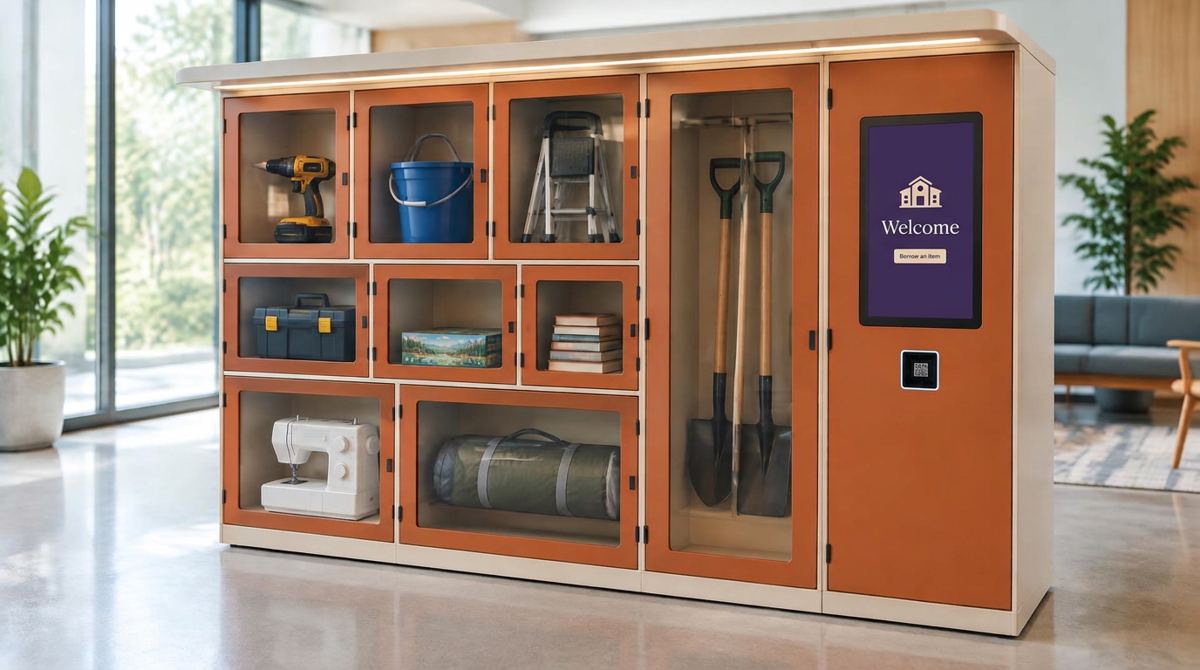
1. Match the customer need to an existing journey
Name the customer, the handover problem and the payer. A residential building may need a managed ecosystem for parcel delivery, laundry, food collection, keys or shared equipment. A shop may need after-hours collections; a sports club may need equipment access where people already play.
Map when customers arrive, where service partners load and who can authorise use. Check whether a locker solves a repeated inconvenience or merely adds another journey. If the host pays, understand its budget and decision process as well as resident demand.
2. Validate demand before negotiating a long commitment
Observe the current process during relevant weekdays, evenings and seasonal periods. Record actual handovers, queueing, missed collections, item sizes and collection delays. Speak to likely users and partners; distinguish expressions of interest from willingness to pay or a signed host commitment.
Compare nearby collection points, staffed counters and delivery alternatives. Where appropriate and permitted, trial a manual handover service to test demand before buying equipment. State which findings are observed and which are still assumptions.
3. Survey the physical site
Bring a dimensioned cabinet proposal to a site visit with the host and qualified installer. Photograph the proposed space with permission, measure the delivery route and record unresolved issues. Do not assume a cabinet that fits the floor area can be delivered or safely anchored.
| Survey area | What to record |
|---|---|
| Position and delivery route | Footprint, door-opening space, lifts/doorways, loading route, weight and structural/fixing needs |
| Customer access | Actual opening hours, gates, building-entry rules, visibility, lighting and accessible approach |
| Power and connectivity | Supply and installation scope, signal/network test and who pays ongoing charges |
| Safety and permissions | Escape routes, building services, landlord/manager approvals, signage and local permit checks |
| Environment | Rain, drainage, temperature, sunlight, dust and equipment suitability |
| Servicing | Partner access, parking/loading restrictions, cleaning, waste and repair access |
4. Check access from the customer's side
Walk the entire journey at the advertised collection time: from street or car park to locker and back. An indoor locker behind a locked lobby door is not a public 24/7 collection point. Resolve visitor entry, non-resident partner access, lift availability and the needs of customers unable to use the proposed interface.
Set support hours separately from access hours. Check how a customer gets help during a failed handover and whether a technician can enter the site when needed.
5. Compare sites without a made-up success score
For each candidate, write the evidence for demand, likely payer, access, servicing cost, approvals and host terms. Mark critical issues as confirmed, unresolved or unsuitable. Decide which requirements are non-negotiable for your service before you compare convenience or appearance.
Pause a site if permission is missing, a safety/access requirement cannot be met, equipment is unsuitable or the economics rely on untested demand. High footfall does not compensate for a blocked exit or unaffordable servicing route.
| Candidate-site record | Evidence or decision |
|---|---|
| Demand and payer | Observed need, customer interviews and the host/partner purchasing process |
| Cost to serve | Site charges, transport route, staff work, utilities and expected support |
| Authority and approvals | Named authorised decision-maker and written approval status |
| Unresolved conditions | Owner, action and deadline for each outstanding survey or approval |
| Proceed / revise / reject | Reasoned decision based on evidence, not a universal footfall threshold |
6. Agree host terms in writing
Confirm who has authority to grant the space. Ask a local lawyer to review whether the arrangement is a lease, licence or another contract and which local property rules apply; the label alone may not settle its legal effect.
| Term | What the agreement should resolve |
|---|---|
| Space and access | Exact position, access hours, keys/permissions, installation and servicing rights |
| Commercial terms | Rent, revenue share or host fee; taxes, reporting, utilities, deposits and review dates |
| Responsibilities | Equipment ownership, maintenance, cleaning, support, claims and insurance |
| Service partners and data | Permitted activities, loading rules, recipient data and any app/portal connection scope |
| Change or interruption | Building works, security changes, outages, relocation and notification |
| End of agreement | Notice, pilot exit, goods recovery, removal costs and making good the space |
7. Design a pilot with a decision date
Agree the service, users, operating hours, trial period, responsibilities and how either side can stop. Decide what evidence would justify continuing: completed handovers, repeat use, cost to serve, support incidents and host/customer feedback. Choose targets from your own economics and host goals, not a claimed industry benchmark.
Keep a baseline so you can compare before and after. Review capacity and collection time as well as sales. Decide whether to continue, change the service or remove the equipment before committing to more sites.
8. Assemble the first-site proposal
Prepare a one-page service proposal supported by demand evidence, site measurements, equipment scope, budget, host responsibilities, approval checklist and pilot review date. List every open condition and who resolves it.
A useful next step is a host conversation backed by this pack, not an equipment order based on an attractive empty corner.
Common questions
- Do I need to own the property?
- Not necessarily. A host may grant use of space under an appropriate written agreement, subject to authority, permissions and local law.
- How much footfall does a locker site need?
- There is no universal threshold. Evaluate relevant demand, willingness to pay, dwell time, service capacity and complete operating costs.
- Can I advertise 24/7 collection?
- Only when the entire customer route is safely and lawfully accessible at those hours. Publish support availability separately.
Sources and further reading
These independent resources support the general planning advice, not claims about LockerLauncher installations, prices or earnings.
- SBA: Market research and competitive analysis
General guidance on demand, customers, location and competing services (United States).
- GOV.UK: Write a business plan
Guidance on objectives, customers, finances and presenting a plan to partners.
- business.gov.au: Register licences and permits
Australian local and activity-based approval checks; use the corresponding authorities for sites in other countries.
- U.S. Access Board: Accessible routes
U.S. accessible-route standards where applicable; a local specialist should review the entire customer journey.
Next step: Shortlist sites, complete the survey and take a written pilot proposal to the authorised host.
Related locker business use cases
Keep reading
- Locker Business Startup Costs: Build Your First-Site Budget
- Locker Business Equipment: What to Specify Before You Buy
- Locker Business Legal Setup: Registration, Contracts and Local Checks
- How to pitch a locker service to a local business
- Shared Service Locker Networks for Residential Buildings
- How to start a locker business
- How to make money from a locker business
- Business ideas hub for first-time founders
- All locker business ideas