Recurring Revenue Business Ideas: Rental Memberships and Managed Lockers
Recurring billing can make income easier to plan, but it also creates an ongoing obligation. Equipment rental, neighbourhood sharing clubs and managed building services are possible models. Choose what the customer repeatedly needs before deciding to charge a subscription.
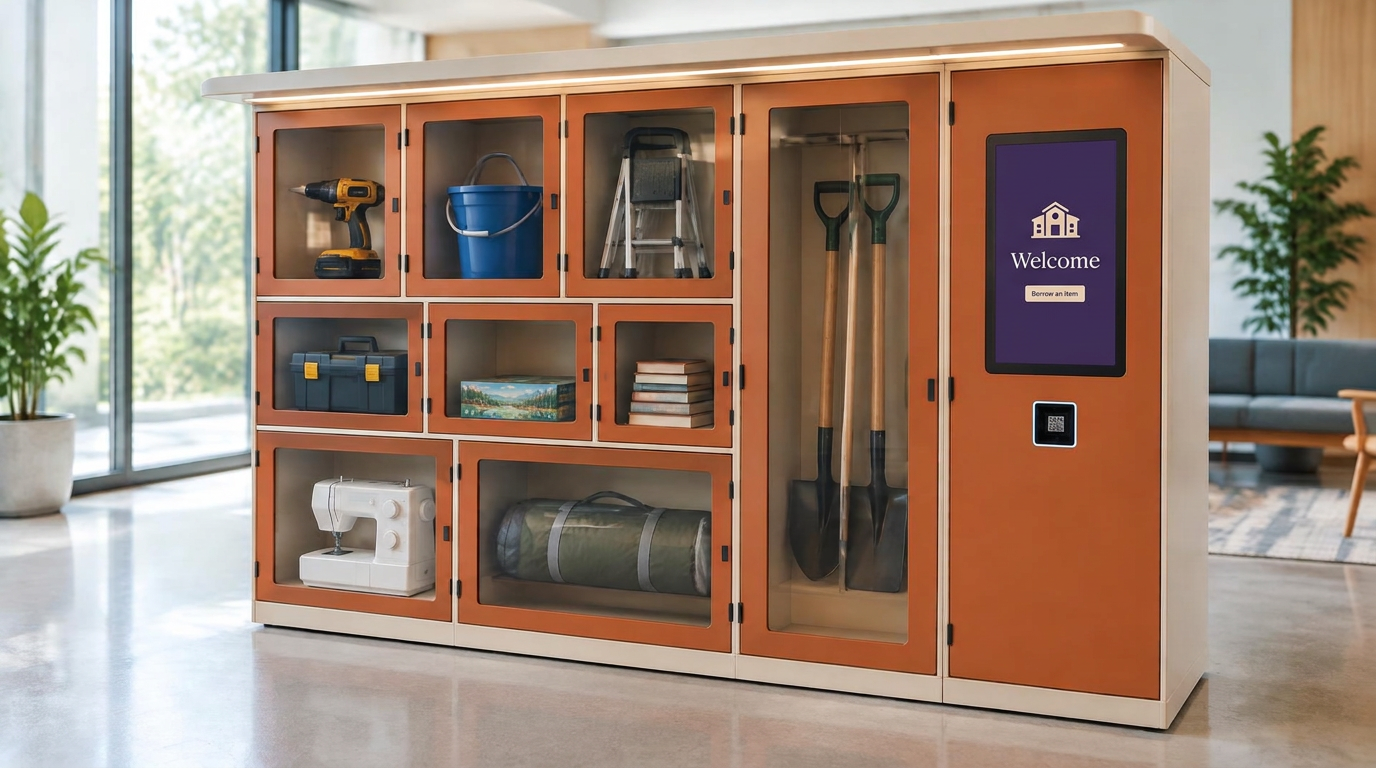
Three models with different customers
Recurring income is not the same as profit or passive income. Identify the payer and the promised service before pricing.
| Model | Who may pay | What you must deliver |
|---|---|---|
| Rental membership | Residents or local users | Agreed access to maintained inventory, booking rules and support |
| Building-funded sharing club | Property owner or managing agent | A defined resident amenity, safe items and usage administration |
| Managed locker service | Business or building operator | Agreed access administration, maintenance coordination and support |
Design a rental membership around real availability
Choose inventory for one audience: shared household tools in residential buildings, creator equipment near studios, or leisure equipment at a suitable venue. Ask what members want, when they need it and what alternative they use today.
Define included rentals, duration, reservations, late returns and peak-time availability. Avoid unlimited promises when inventory is finite. Camera accessories, batteries and missing parts need checklists; drones and outdoor equipment may require additional local permissions or training.
Inspect before the next customer collects
Assign cleaning, charging, servicing and condition checks to a person. A returned item should not become available automatically when safety or completeness needs review. Keep damaged items out of circulation.
Provide suitable instructions, check the applicable product and hire requirements, and obtain relevant insurance advice. A locker automates access, not safety inspection or a customer’s ability to use the item.
Price renewals and cancellations fairly
Use customer research and actual quotes to set a price. Include replacement inventory, site fees, software, support, maintenance, insurance and payment processing. Consider a pay-per-use pilot before selling long-term memberships.
Explain billing periods, what is included, renewal, cancellation, deposits and damage policies before purchase. Follow local consumer requirements. A payment gateway connection requires an agreed setup; this website is not an active rental checkout.
Measure retained demand, not only subscriptions sold
Track repeat users, renewals, cancellations, unavailable-item requests and support costs. For a membership, compare total recurring income with all service costs and a realistic allowance for worn or lost inventory.
Keep separate records for building contracts and consumer rentals. A building-funded club may be a useful amenity without charging each resident. Do not assume the software subscription creates operator income unless a customer contract pays for an actual service.
Start with one neighbourhood and a small catalogue
A staffed lending session or partner pickup can test the model first. If self-service solves a measured handover problem, assess suitable lockers and integrations. Add inventory only when evidence supports it.
Agree ownership, item custody, access, support and exit arrangements. Keep a backup for unavailable stock or failed access. A recurring-revenue business still needs active sales, fulfilment and customer care.
常见问题
- Is a rental membership passive income?
- No. Inventory, inspections, maintenance, customer support and renewals need ongoing work and money.
- Can a building pay instead of each resident?
- A building-funded sharing service is a possible model to negotiate. Settle the scope, payer, budget and responsibilities with the authorised decision-maker.
- Can I promise unlimited rentals?
- Only offer limits you can fulfil. Finite stock needs reservation, duration and fair-use rules made clear before purchase.
资料来源和延伸阅读
这些独立资源支持一般规划建议,而非关于 LockerLauncher 安装、价格或收益的主张。
- SBA: Market research and competitive analysis
General guidance on demand, customers, location and competing services (United States).
- SBA: Calculate your startup costs
A framework for separating one-off and recurring expenses and planning break-even (United States).
- HSENI: Supplying and hiring equipment
Equipment supply and hire responsibilities in Northern Ireland; not approval for an unattended rental model. Check the equipment and rules where you operate.
下一步: Choose the payer, write the membership or managed-service promise and test demand for a small catalogue before ordering hardware.