Shared Service Locker Networks for Residential Buildings
A residential locker ecosystem can connect residents, property managers and local service partners. One carefully configured installation may support several compatible handover workflows, but capacity, storage requirements, permissions and responsibility must be designed together.
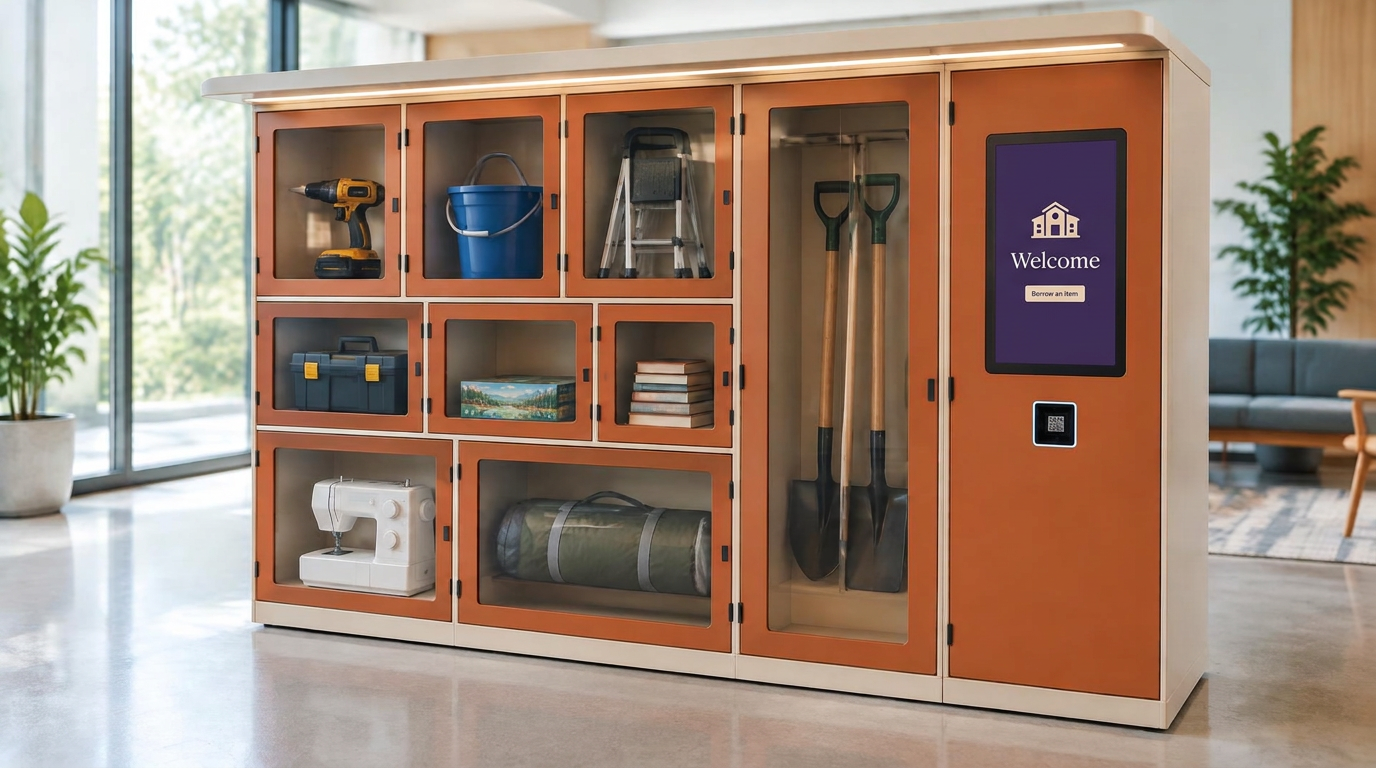
Begin with one building and one repeated need
Ask residents and the property manager about parcel delivery, laundry, repair collection, shared tools and food pickup. Identify the service that has a real payer and a workable fulfilment partner. Do not launch every service just because compartments are available.
Residential buildings lead this model; workplaces, community venues and retail hosts can also be assessed. A host-controlled shared system may serve residents only, rather than being a public collection site.
Agree who pays and who does each task
Potential arrangements include a building-funded amenity, partner access fees, customer transaction charges or a negotiated combination. These are proposed models, not confirmed revenue-sharing packages or proof of demand.
Name who owns the lockers, contracts for software, loads items, inspects returns, contacts residents and resolves loss or failed access. Define data access and liability separately for each partner. A common installation must not blur responsibility.
Connect resident portals and apps through an agreed scope
LockerLauncher supports open API options on the appropriate plan, a default resident/building interface, connections to resident apps including own-brand white-label apps, or standalone kiosk handovers. Agree identity, permissions and supported hardware before integration.
Potential workflows include onboarding residents, changing access on move-out and sending collection notifications. No named portal is assumed to be pre-integrated. Separate assigned smart mailboxes from shared parcel compartments, and confirm delivery requirements for each.
Plan capacity and product separation
Reserve suitable capacity for each service and monitor how long orders occupy compartments. Define what happens when a locker bank is full, a partner misses a delivery or a resident never collects. Do not allocate the same compartment to overlapping bookings.
Food, flowers, garments, keys and returned equipment have different hygiene, storage and custody needs. Use dedicated compartments or separate equipment where required. A smart access system does not certify safe product storage.
Cost and test the managed service
Build a budget for equipment, installation, software, connectivity, host charges, partner visits, administration, maintenance, insurance and support. Compare agreed income with all costs, not only a partner fee.
Pilot one service, check actual use and support incidents, then add a compatible second workflow if capacity and economics allow. Obtain host approval for each addition. Record responsibilities and an exit process before proposing a larger network.
Veelgestelde vragen
- Can multiple businesses share a locker bank?
- Potentially, with agreed permissions, capacity, custody and compatible storage requirements. Some services need separate compartments or separate equipment.
- Does every resident app already connect?
- No. App and portal connections need a technical assessment, appropriate plan and agreed scope.
- Is a shared locker network guaranteed to earn fees?
- No. Building and partner fees must be negotiated for a useful service, and all operating costs must be covered.
Bronnen en verder lezen
Deze onafhankelijke bronnen ondersteunen het algemene planningsadvies, niet claims over installaties, prijzen of inkomsten van LockerLauncher.
- SBA: Market research and competitive analysis
General guidance on demand, customers, location and competing services (United States).
- SBA: Calculate your startup costs
A framework for separating one-off and recurring expenses and planning break-even (United States).
Volgende stap: Ask one property manager and one local service partner to map a resident handover problem, the payer and the responsibilities for a small pilot.
Related locker business use cases
Verder lezen
- 10 bedrijfskansen in appartementsgebouwen en woongemeenschappen
- Recurring Revenue Business Ideas: Rental Memberships and Managed Lockers
- Grow Your Business Without Opening Another Shop
- After-Hours Customer Collection and Returns: A Small Business Guide
- Hoe start je een lockerbedrijf
- Hoe verdien je geld met een lockerbedrijf
- Ideeëncentrum voor startende ondernemers
- Alle ideeën voor lockerbedrijven